

 How do you choose an interior designer?
Choose an interior designer by reviewing their portfolio, process, communication style, project experience and ability to understand your practical needs. The best designer for you is not always the one with the most dramatic images, but the one who can help you make clear, realistic decisions for your own home.
This matters because interior design is personal. A room can look beautiful in a photograph and still be wrong for your lifestyle, budget or property. The right designer should help you understand what will work in your real space, with your light, existing furniture, daily routines and priorities.
Before committing to a larger project, it is sensible to ask how the designer works, what information they need, what is included and whether a consultation is a better first step.
Start with the type of help you actually need
Before choosing a designer, be clear about the level of support you need. Not every design problem requires a full interior design project.
Some clients need help with one room. Others need support across the whole home. Some need advice on curtains, blinds, colour or finishes. Others need a designer to guide a renovation from early decisions through to a complete scheme.
One-room advice
If one room feels wrong, you may not need a full project. You may need help understanding what is causing the problem.
For example:
- the sofa may be too large;
- the layout may block movement;
- the paint colour may not suit the light;
- the curtains may be too short or too flat;
- the rug may be the wrong size;
- the room may lack a clear focal point.
In this case, choose a designer who can diagnose the issue and explain what should change first.
Full home or renovation support
If you are renovating, building or designing several connected rooms, you may need more complete support. A designer should be able to think about the whole property, not just one room at a time.
This may include flooring, lighting, paint colours, furniture, window treatments, built-in storage, finishes and how the rooms connect visually.
For larger projects, choose a designer who has a clear process and can explain how decisions will be made in the right order.
Curtains, blinds or finish guidance
Some clients need specialist help with fabrics, curtains, blinds, upholstery or finishes. These details can strongly affect the result of a room.
Curtains are not just a finishing touch. They influence proportion, softness, privacy, light and acoustics. A designer with strong fabric and window treatment knowledge can help you avoid expensive mistakes such as the wrong fabric, heading style, length or fitting method.
Online consultation before a larger project
If you are unsure whether the designer is the right fit or whether your project needs full support, an online interior design consultation can be a practical first step before making a larger commitment.
This can help you test how the designer thinks, how they listen and whether their advice gives you clarity. It can also help you decide whether you need a full design project or simply focused direction.
Look beyond a beautiful portfolio
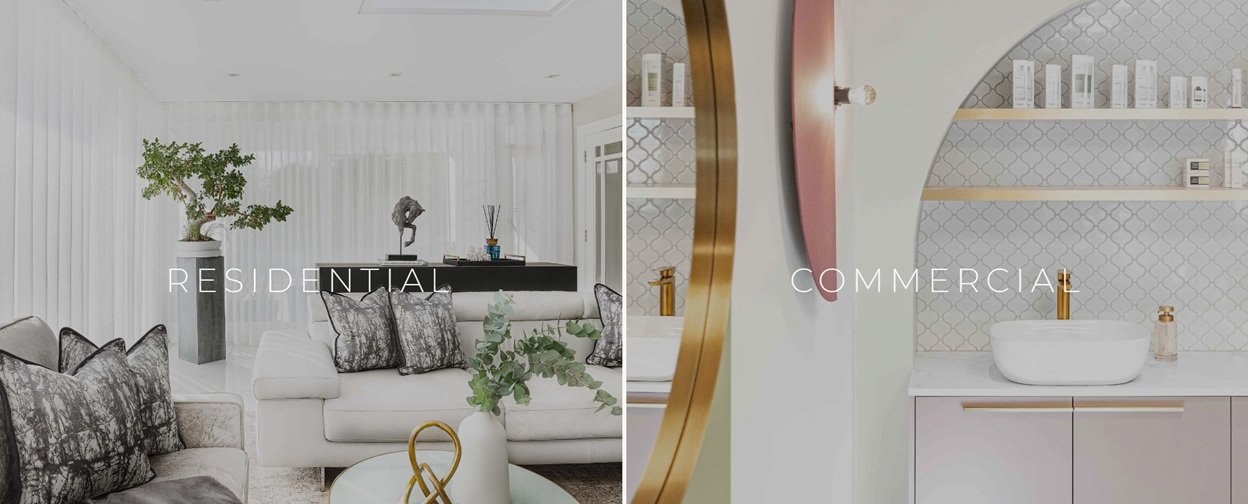
A portfolio matters, but it should not be the only reason you choose a designer.
Beautiful images show taste and presentation, but they do not always show the full design process. You need to look for signs that the designer can solve practical problems, not just create attractive rooms.
Does the work show practical layouts?
Look at whether the rooms feel usable. Is there enough space to move? Does the furniture scale suit the room? Are seating areas arranged naturally? Do dining areas, bedrooms and living spaces look comfortable as well as stylish?
A good interior should work in daily life, not only in a photograph.
Are the rooms varied or all the same?
A strong designer can adapt to different clients and properties. If every project looks identical, ask whether the designer will understand your style or simply repeat their own.
You do not need a designer who copies your taste exactly. You need one who can interpret your needs and guide them into a cohesive result.
Can you see attention to detail?
Look for details such as curtain height, lighting layers, fabric combinations, furniture scale, artwork placement, finishes and how colours move through a space.
Attention to detail is often what separates a room that simply looks decorated from one that feels properly resolved.
Does the style fit your home and lifestyle?
A portfolio should help you understand whether the designer’s work could suit your home. But do not only ask, “Do I like this style?” Ask, “Could this designer understand how I live?”
A home with children, pets, guests, work-from-home needs or existing furniture requires practical thinking as well as visual direction.
Check how the designer listens and asks questions
A good first conversation should not feel like the designer is simply telling you what they like.
They should ask questions about:
- how you use the space;
- what is not working;
- what you want to keep;
- what decisions are already fixed;
- what budget range you are comfortable with;
- how much support you want;
- what you find difficult to decide;
- what feeling you want the room to have.
The best designers listen before they suggest. They understand that the design should respond to the client, not the other way around.
A good interior designer should ask about your lifestyle, practical needs, budget priorities, existing furniture, design problems and decision timeline. If they only talk about style without understanding how you live, they may not be the right fit for your project.
Listening is especially important if you are unsure what you want. Many clients do not arrive with a perfect brief. A designer should be able to help shape the brief through thoughtful questions.
Ask about process, not just style
Before choosing an interior designer, ask how the project will actually work. A clear process reduces confusion and helps you understand what you are paying for.
What happens first?
Does the designer begin with a consultation, site visit, questionnaire, photos, plans, measurements or showroom meeting? You should know what the first step involves and what outcome to expect.
What information do they need from you?
A designer may need photos, plans, measurements, inspiration images, product links, budget information or a list of what is not working. If they can explain this clearly, the process is more likely to feel organised.
How are decisions made?
Ask how colours, finishes, furniture, curtains, blinds and lighting are chosen. Good design is not a random collection of nice items. Decisions should be connected.
What is included and what is not included?
This is important. A consultation, room design package and full interior design service may all include different levels of support.
Before you commit, understand whether the service includes advice only, sourcing, drawings, specifications, supplier communication, revisions or installation support.
Understand whether you need consultation or full design support
Not every client needs the same level of service. Choosing the right designer also means choosing the right format of help.
When a consultation is enough
A consultation may be enough when you have a specific question or a limited number of decisions to make.
For example:
- you need help choosing colours;
- you are unsure about furniture layout;
- you want advice on curtains or blinds;
- you are comparing finishes;
- you need a second opinion before ordering;
- you want to know where to spend first.
A consultation is also useful if you want to understand whether a designer’s approach suits you before moving into a larger project.
When full service is more suitable
Full design support is usually better when the project has many connected decisions.
This may include:
- a renovation;
- a new build;
- several rooms;
- full furniture sourcing;
- lighting and finish decisions;
- custom curtains, blinds or upholstery;
- detailed specifications;
- a complete design concept.
If the decisions affect each other, a fuller process may save time and reduce mistakes.
Questions to ask before choosing an interior designer
The right questions will tell you more than a portfolio alone.
What types of projects do you usually work on?
This helps you understand whether the designer is used to your type of project. A one-room refresh, full renovation, commercial space and custom curtain project all need different skills.
Can you work with existing furniture or finishes?
A good designer should not always need to replace everything. Sometimes the best result comes from keeping the right pieces and changing the decisions around them.
How do you approach budget priorities?
Ask how the designer helps clients decide where to spend and where to save. This is important because spreading budget evenly across everything does not always create the best result.
What should I prepare before the first consultation?
This shows how organised the designer’s process is. They should be able to tell you what photos, measurements, plans, links or inspiration images would be useful.
What decisions should I avoid making too early?
This is a very practical question. A designer should be able to warn you about decisions that can cause problems later, such as buying furniture before checking the layout or choosing paint before reviewing fabrics and flooring.
Red flags when choosing an interior designer
Choosing the wrong designer can lead to wasted time, unclear decisions and expensive changes later. Watch for signs that the fit may not be right.
They push one style onto every client
A designer should have taste and direction, but they should not force every client into the same look. Your home should reflect your lifestyle, not just the designer’s signature style.
They do not ask practical questions
If the conversation stays only on colours and inspiration images, important practical issues may be missed. Layout, storage, lighting, privacy, budget and daily use all matter.
They cannot explain the process clearly
If you do not understand what happens next, what is included or how decisions are made, the project may become stressful.
A clear process is part of good design.
They focus only on products, not decisions
Interior design is not just shopping. A designer should help you understand why one choice works better than another.
If the focus is only on buying things, the room may become a collection of items rather than a cohesive space.
They encourage spending before planning
Be cautious if a designer encourages purchases before the layout, palette or priorities are clear. Buying too early is one of the easiest ways to waste money.
How AK Interior approaches client fit and design decisions
If you are looking for an interior designer in Cork, the first question should not only be whether you like the portfolio, but whether the process helps you make clearer decisions for your own home.
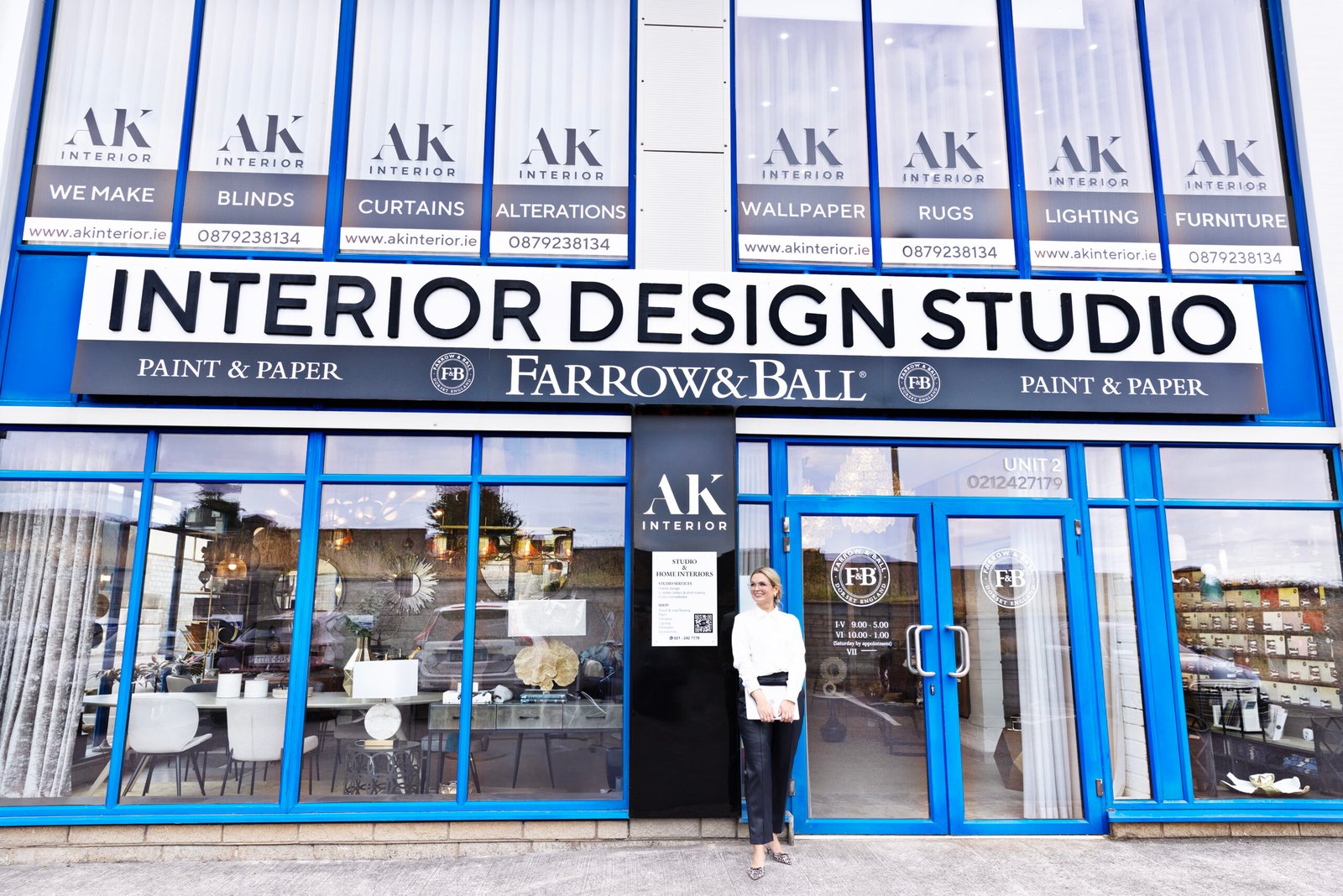
AK Interior is a Cork-based interior design studio founded by Agnė Kremenskienė. The studio works across residential interiors, commercial projects, online consultations, curtains, blinds, showroom services and bespoke interior solutions.
The approach is client-first. Each project begins with understanding the client’s story, lifestyle, needs and practical priorities. The goal is not to impose one fixed style, but to guide decisions so the final space feels personal, functional and visually connected.
AK Interior’s Midleton studio includes a showroom, workroom and offices. The showroom allows clients to compare materials such as lighting, wallpaper, flooring, bespoke furniture, accessories and fabrics. The workroom supports custom blinds, curtains and upholstery, made by the in-house seamstress team and overseen by Agnė.
This matters because many design decisions are easier when materials can be compared together. A fabric, paint colour or finish can look different when seen beside flooring, lighting and furniture options.
You can also learn more about the AK Interior story and studio approach before deciding what type of design support suits your project.